
Young rabbits grow fast. Their bones, muscles, organs, and digestive systems are still developing. That growth requires more nutrients than adult rabbits need. Understanding why young rabbits need higher protein hay helps you build a healthy rabbit diet from the start and prevent health problems later.
If you raise baby rabbits, baby bunnies alongside other small animals, the type of hay you feed matters. Not all hay types provide the same protein, calcium, and fiber levels. Choosing the right hay supports steady growth, strong rabbit’s teeth, and stable body weight during early life.
What Makes Young Rabbits Different From Adult Rabbits?
Young rabbits burn more energy than adult rabbits. They are building bone density, muscle tissue, and immune strength. Their digestive system is still maturing, which is one reason why young rabbits need higher protein hay compared to senior bunnies or adult rabbits.
Protein supports muscle development. Calcium supports bone growth. Extra nutrients support overall development. Most rabbits reach adulthood around six to seven months of age. Before they reach adulthood, a rabbit's age and growth stage require a different diet than mature animals.
What Is Alfalfa Hay and Why Is It Higher in Protein?
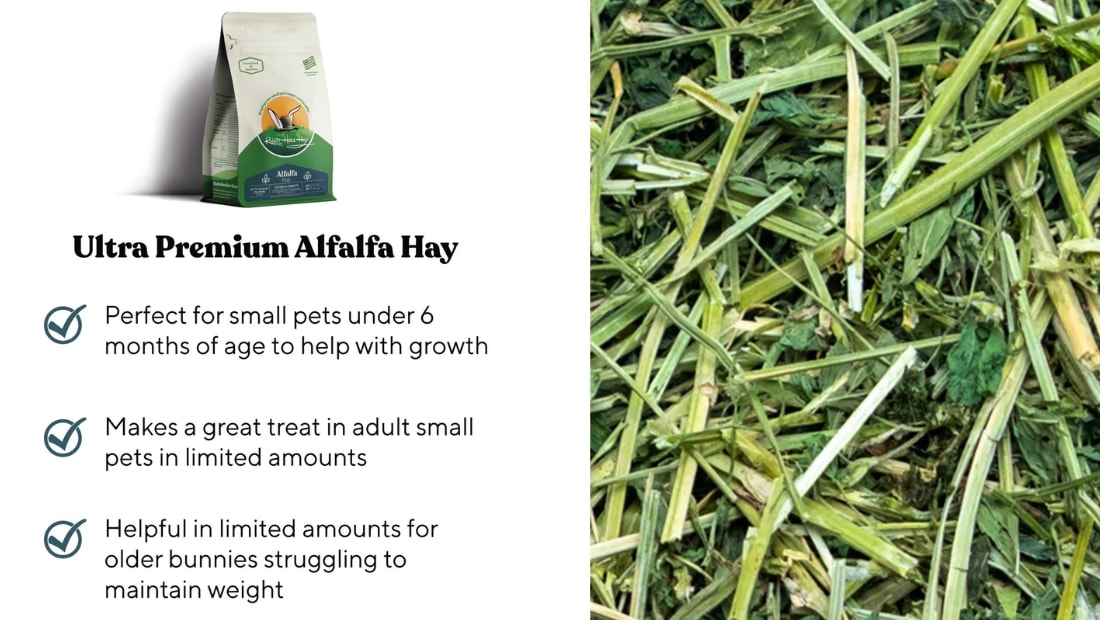
Alfalfa hay is a legume hay, not a grass hay. Unlike timothy hay, orchard grass, oat hay, and other grass hays, alfalfa contains higher protein and higher calcium content. That makes it ideal for young rabbits who need more fuel for growth.
For breeders or owners looking for a clean, consistent source, you can try Rabbit Hole Hay Ultra Premium Alfalfa Hay, which is mountain-grown and hand-packed to stay fresh and low in dust. Its nutrient profile aligns well with the needs of baby rabbits between three weeks and seven months of age.
How Does Protein Support Growth in Young Rabbits?
Protein helps build muscle tissue and supports organ development. Without enough protein, young rabbits may struggle to gain proper body weight or develop strong muscles. This is a key reason why young rabbits need higher protein hay during early life stages.
Higher protein also supports energy levels. Young rabbits eat, explore, and grow rapidly. Their diet must provide consistent nutrients through unlimited amounts of hay, along with a small amount of pellets formulated for young animals.
Why Is Calcium Important for Baby Bunnies?
Calcium rabbits absorb directly from their diet. Young rabbits need higher calcium for bone growth and tooth development. Alfalfa hay provides more calcium than grass hays like timothy or orchard grass.
However, excess calcium in adult rabbits can lead to bladder sludge or bladder stones. That is why most rabbits must transition from alfalfa to grass hay once they reach adulthood. For young rabbits, though, that higher calcium content is beneficial and supports healthy development.
Comparing Hay Types
Different hay types vary in protein, calcium, and fiber levels, which directly affect a rabbit’s growth and long-term health. Choosing the right hay depends on the rabbit’s age, nutritional needs, and stage of development.
Alfalfa Hay
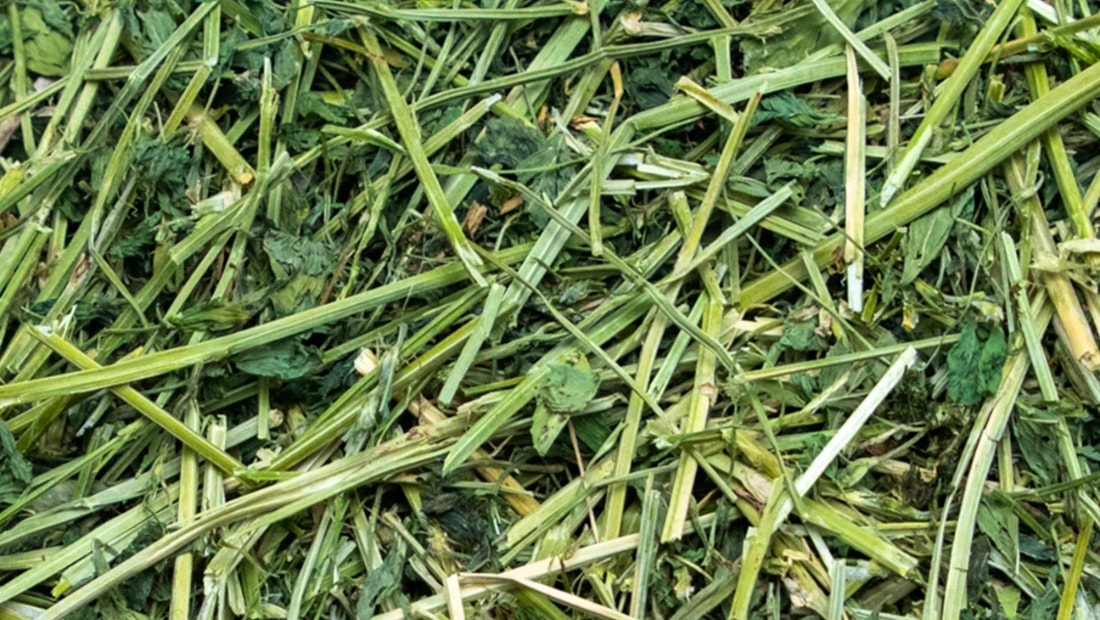
Alfalfa hay is a legume hay with higher protein and higher calcium content than grass hays. This is the primary reason why young rabbits need higher protein hay during early growth stages. Baby rabbits, baby bunnies, and other small animals rely on these extra nutrients to support bone development, muscle growth, and healthy weight gain.
Because of its nutrient density, alfalfa hay is best suited for young rabbits under seven months of age and growing animals. Once rabbits reach adulthood, continued feeding can contribute to excess calcium, bladder sludge, and weight gain, which is why a transition is required.
Timothy Hay
Timothy hay is a grass hay commonly used as the main food source for adult rabbits. It contains high fiber with lower protein and lower calcium levels, making it suitable once rabbits reach adulthood and no longer need extra nutrients for growth.
For most rabbits, timothy hay supports digestive health, steady body weight, and proper wear on the rabbit’s teeth. It also helps prevent health problems linked to excess calcium while still allowing unlimited amounts of hay in the rabbit’s diet.
Orchard Grass
Orchard grass is another grass hay often chosen for adult rabbits, especially picky eaters. It has a softer texture and milder smell compared to timothy hay, which some rabbits prefer when transitioning off alfalfa.
Nutritionally, orchard grass provides high fiber with lower calcium content. This supports digestive balance, healthy poop output, and long-term dental health without contributing to calcium-related issues in adult rabbits.
Oat Hay
Oat hay is a grass hay that offers variety and enrichment in a rabbit’s diet. It contains fiber similar to other grass hays, but the seed heads can make it more appealing for rabbits that lose interest in standard options.
Oat hay works well as part of a mix with timothy hay or orchard grass for adult rabbits. It should not replace the primary hay source but can help encourage consistent hay intake and reduce selective eating.
Other Grass Hays
Other grass hay options include meadow hay and mixed grass varieties. These hays typically have moderate fiber and low calcium content, making them appropriate for adult rabbits and senior bunnies.
Rotating small amounts of other grass hay can help prevent boredom and support consistent eating habits. For most rabbits, variety encourages steady hay consumption while maintaining digestive health and proper tooth wear.
Why Young Rabbits Need Higher Protein Hay for Dental Health
Rabbit’s teeth grow continuously. Chewing hay keeps teeth worn down and supports dental health. Fresh hay also stimulates proper jaw movement and reduces the risk of dental issues.
Alfalfa hay still provides fiber, even though it contains more protein than grass hay. The fiber supports healthy poop production and reduces digestive issues. A healthy rabbit diet always includes unlimited amounts of rabbit hay to maintain digestive balance.
How Much Hay Should Young Rabbits Eat?
Young rabbits should have unlimited access to fresh hay at all times. Hay for rabbits should make up the largest portion of the rabbit’s diet, even when more pellets are offered during growth stages.
Pellets should support the hay, not replace it. Most rabbits tend to eat hay throughout the day and night. Monitoring body weight helps confirm they are growing steadily without excessive weight gain.
When Should You Transition to Grass Hay?
Transitioning from alfalfa to timothy or orchard grass typically begins around six to seven months, when rabbits reach adulthood. This transition reduces calcium intake and helps prevent bladder sludge, obesity, and other health problems.
Vets recommend that adult rabbits eat about 80 percent grass hay as the foundation of a healthy rabbit diet. Alfalfa may still be given as a small amount or occasional treats for adult rabbits, but it should not be the primary hay.
Signs You Chose the Right Hay
Healthy growth shows in several ways. Young rabbits should maintain steady weight gain, produce normal poop, and stay active. Their coat should look healthy, and they should eat consistently without soft stools.
If you notice digestive issues, poor appetite, or unusual weight changes, review the rabbit's diet and consult a vet. Choosing fresh hay from trusted feed stores or reliable suppliers helps reduce debris and dust that can irritate small animals.
What About Leafy Greens, Vegetables, and Treats?
Young rabbits can begin small portions of leafy greens once their digestive system stabilizes. Fresh grass and safe veggies add enrichment but should not replace hay.
Occasional treats like small pieces of vegetables or clover should remain limited. Seeds, legumes, and sugary treats are not part of a healthy rabbit diet. Hay must always remain the primary food source.
Why Fresh Hay Quality Matters
Fresh hay smells clean and looks green. Dusty or brown hay may reduce appetite or irritate the respiratory system, especially in young rabbits and other small animals. Fresh hay also encourages steady eating, which supports digestive health and consistent poop output.
Quality hay reduces waste and supports daily rabbit care routines. Many rabbits prefer soft, leafy strands, and introducing new hay slowly can help picky eaters adjust when transitioning from alfalfa to timothy or orchard grass.
Common Health Problems Linked to Incorrect Hay
Feeding the wrong hay for a rabbit's age can cause issues. Too much alfalfa in adult rabbits may lead to bladder sludge or excessive weight gain. Too little protein in young rabbits may slow growth.
Digestive issues like soft stools can occur if hay intake drops and pellets increase too much. Maintaining unlimited amounts of hay supports gut movement and healthy poop patterns.
Building a Healthy Rabbit Diet From the Start
A healthy rabbit diet during early life should include:
- Unlimited alfalfa hay
- Age-appropriate pellets
- Small amounts of leafy greens
- Clean water at all times
This structure supports growth while protecting digestive health. As the rabbit reaches adulthood, shift toward grass hay like timothy hay or orchard grass to maintain long-term balance.
Why Young Rabbits Need Higher Protein Hay for Long-Term Health
Feeding properly during early growth sets the foundation for a healthy rabbit. Bone density, dental strength, and muscle development all depend on balanced nutrition in the first months of life.
Understanding why young rabbits need higher protein hay helps breeders and pet owners prevent future health problems. Starting with high-quality alfalfa hay and transitioning at the right time supports steady growth and lifelong health. Rabbit care starts with the basics. Hay is not just filler. It is the base of the rabbit's diet and the key to raising healthy, active animals from baby bunnies to senior bunnies.

