
Rabbits often tip, drag, or dump pellet bowls for a few simple reasons. Some are bored. Some are excited at feeding time. Some are trying to dig, toss, or rearrange their space the way rabbits naturally do. Others learn that flipping a bowl gets attention fast. If you are trying to figure out how to stop rabbits from dumping their pellet bowls, the fix usually starts with choosing better food bowls or feeders, improving setup, and giving your bunny a feeding routine that matches normal rabbit behavior.
For many owners and breeders, this problem is more than a small mess. Dumped pellets can lead to wasted food, dirty housing, more daily cleanup, and uneven eating if feed gets mixed into bedding or pushed near the litter box. In multi-rabbit setups with many rabbits, bowl dumping can also make it harder to track how much each rabbit actually chose to eat. A better feeding system helps reduce waste, keeps the cage or enclosure cleaner, and makes daily care more consistent.
Why Rabbits Dump Their Pellet Bowls
Rabbits are natural diggers and movers. In the wild and in domestic settings, they interact with their environment using their nose, front paws, feet, and teeth. That means a lightweight dish full of pellets can quickly become something to push, flip, or investigate. What looks like bad behavior is often normal rabbit behavior in the wrong setup, especially for active small animals that like to test anything loose.
Some rabbits dump bowls because the container is too light or easy to grab. Others do it because they are bored and need more enrichment. Young rabbits may do it during active play periods. Some rabbits also learn that when they slam a bowl around, a person comes over, refills it, or gives attention. Once that pattern starts, bowl flipping can become a habit, and that is when owners start looking for ways to stop flipping and get rid of the daily cleanup.
Common Reasons This Problem Gets Worse
Housing setup often plays a big role. A bowl placed near a corner, wall, or jumping area may get bumped more often. A dish with a wide lip may be easier to grip with the teeth or shove with the head. A feeder that slides across smooth flooring can also invite more pushing. If pellets are offered in a way that lets the rabbit paw through them, the rabbit may keep doing it because the action feels rewarding.
Feeding too many pellets at once can add to the issue. A full bowl is easier to scatter, spill, or dump. Some rabbits sort through pellets, push unwanted pieces away, or dig for the parts they like most. Others sit over the bowl and paw through it before eating pellets. When the feeding method does not control access well, the result is often a mess on the floor. That is why many rabbit owners make the switch from open bowls to more secure feeders.
Why Dumped Pellet Bowls Are a Problem
A dumped bowl is messy, but the bigger issue is waste and sanitation. Pellets that fall into bedding, urine spots, or dirty cage areas often need to be thrown away. If pellets land near the litter box or under damp hay, they are usually no longer good to feed. That increases feed costs over time and adds more cleanup work each morning.
It can also make feeding less accurate. If you cannot tell how much your rabbit ate because half the pellets ended up on the floor, it becomes harder to spot changes in appetite, routine, or health. That matters because appetite is one of the first signs many owners watch. A clean and stable setup for food and water bowls, hay, and the water bowl or water bottle makes it easier to notice when something is off.
What Usually Works Better Than a Pellet Bowl
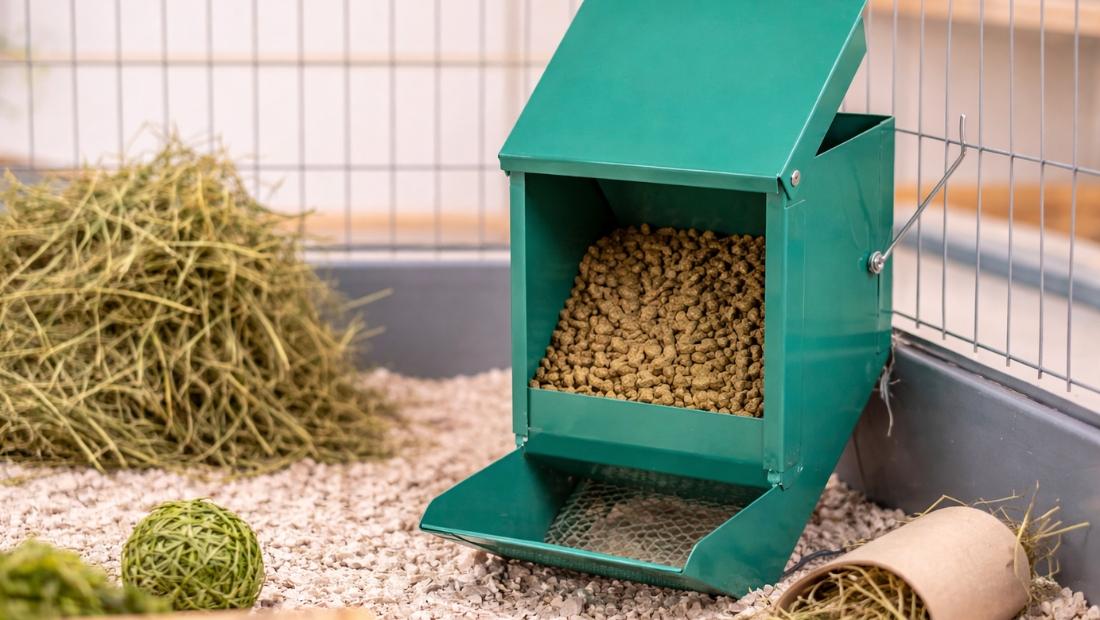
In many cases, the best answer is not trying to train the rabbit to leave the bowl alone. The better fix is changing the feeding equipment. Rabbits do best with feeders that are harder to tip, harder to drag, and harder to dig through. A mounted feeder often works better than a loose dish because it removes the chance to throw or flip the whole container.
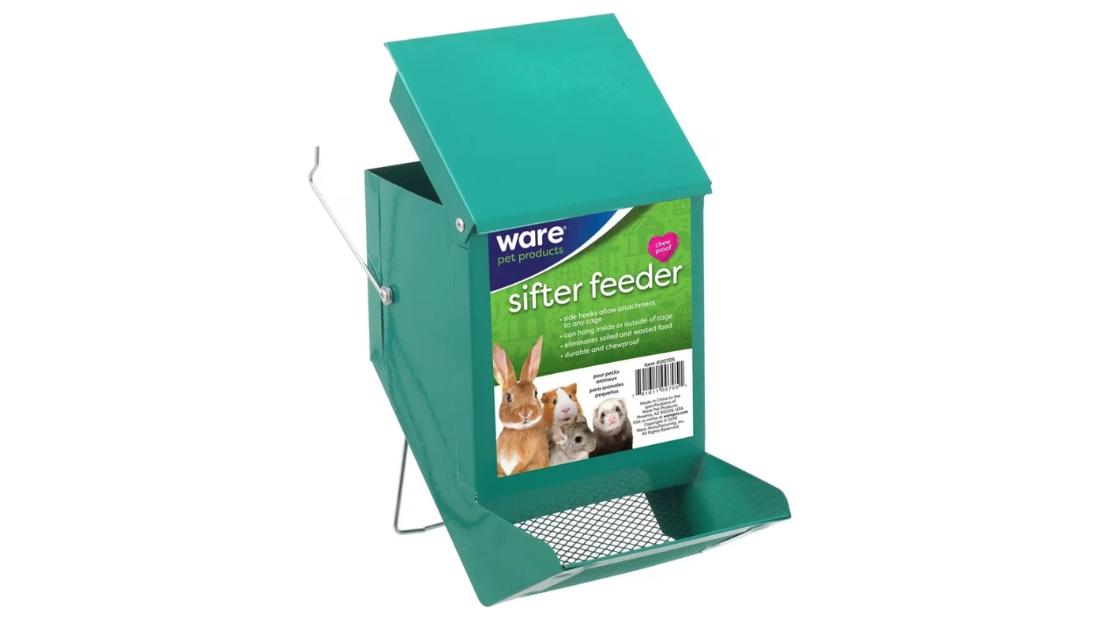
The Sifter Feeder with Lid is one example of a feeder designed for this kind of problem. It is an all-metal, powder-coated, chew-proof feeder that hangs on a cage and holds several days of food. Because it can hang and attach securely to the enclosure instead of sitting loose on the floor, it helps reduce the mess caused by bowl flipping and pellet scattering. The lid also helps keep feed more contained and cleaner between refills.
How a Mounted Feeder Helps Stop Pellet Dumping
A mounted feeder changes the feeding setup in a way that works with rabbit behavior instead of fighting it. Since the feeder hangs securely on the cage or wire panel, the rabbit cannot easily grab the whole container and flip it over. That alone solves the main problem for many owners. The rabbit still gets access to pellets, but without the same chance to knock everything onto the floor.
The feeder design can also help reduce waste during normal eating. Instead of standing over a bowl and pawing through a large open pile of pellets, the rabbit eats from a more controlled opening. That can mean fewer pellets kicked out during feeding. For owners who want a cleaner setup, j feeders and other mounted options are often a practical upgrade from crocks, dog bowl styles, or open dishes that move too easily.
Bowl vs Mounted Feeder
The type of feeder you use can make a big difference in how much food gets wasted and how clean the cage stays. A simple bowl may work for some rabbits, but active rabbits often do better with a feeder that stays attached, feels more sturdy, and is harder to move.
-
Loose bowl: A loose bowl is easy for rabbits to tip, chew, spill, and drag around the cage, which often leads to wasted pellets, a mess on the floor, and food getting dirty faster. This is true even with some ceramic bowls, a ceramic dog bowl, or a heavy bowl, because a determined rabbit can still catch the edge, push with the head, or move it across the room.
-
Mounted feeder: A mounted feeder stays attached to the cage, is harder to flip or knock over, helps keep food cleaner, and usually works better for active rabbits that keep dumping their pellet bowls. It also works better for setups where the feeder needs to stay in one place instead of rolling, sliding, or getting pushed into a corner.
Other Ways to Stop Rabbits From Dumping Their Pellet Bowls
A feeder upgrade helps, but setup still matters. Place the feeder at a height that lets your rabbit eat comfortably without climbing into it. Keep it in a stable area of the cage or enclosure where the rabbit does not need to push past it or jump over it. Check that it is attached firmly so it does not rattle or shift more than necessary during use, especially if the feeder hangs from wire.
It also helps to review how many pellets you are feeding. Rabbits should not have unlimited pellets in most cases, and portions should match age, size, and diet plan. If too many pellets are left sitting for long periods, rabbits may sort through them, waste them, or lose interest. Measured portions can reduce both dumping behavior and uneaten leftovers, and they make it easier to fill the feeder with the right amount each morning.
Keep the Rest of the Environment Enriching
Some rabbits dump bowls because they need more to do. Rabbits need hay, space to move, and safe enrichment that lets them chew, explore, and interact with their environment. A rabbit with no outlet for normal behavior may turn the pellet bowl into a toy. That is why solving bowl dumping sometimes means improving the full setup, not just replacing one dish.
Try offering more hay access, safe toys, tunnels, or simple rabbit-safe play items such as untreated cardboard or toilet paper rolls. In some cases, owners notice that rabbits stop trying to toss the bowl once they have something else to dig, shred, or chew. A feeder can stop the mess, but reducing boredom helps address one of the main reasons the mess started in the first place.
Signs Your Current Feeding Setup Is Not Working
A feeding setup may need to change if you keep seeing pellets on the floor, damp feed in bedding, or a rabbit that paws aggressively at the bowl every day. You may also notice that your rabbit sits in the bowl, chews the bowl, or drags it into a corner. These are signs that the current container may not be a good fit for that rabbit’s behavior.
Another sign is inconsistent intake tracking. If you are not sure whether your rabbit ate the pellets or dumped them, it is harder to monitor appetite. That is a bigger issue for young rabbits, seniors, rabbits recovering from illness, or breeding rabbits whose intake you want to watch more closely. A stable feeder makes feeding habits easier to observe and helps you realize sooner when something has changed.
A Simple Feeding Routine That Helps
Most rabbits do well with a routine that is predictable and clean. Refill the feeder on a consistent schedule, check for leftover pellets, and wipe down the feeder as needed. Keep hay available as the main part of the diet, with pellets fed in the right amount for your rabbit’s age and needs. Fresh water should always be available, whether your rabbit drinks from a water bowl or a bottle.
A routine also helps you spot changes faster. If a rabbit that normally runs to the feeder suddenly leaves pellets behind, that stands out more clearly when the feeding area stays neat. Good rabbit care often comes down to noticing small changes early. A cleaner, more stable feeder setup supports that every day and gives you better information about how your bunny likes to eat, drink, and behave.
When a Rabbit May Need More Than a Feeder Change
If your rabbit suddenly starts throwing food around after not doing it before, look at the bigger picture. Changes in appetite, stress, discomfort, housing changes, or competition from a nearby rabbit can all affect feeding behavior. A rabbit that seems frantic around food or stops eating normally may need closer observation and a closer look at the full enclosure setup.
You should also look at body condition, droppings, and general behavior. Bowl dumping is often a simple behavior issue, but feeding changes can sometimes be one piece of a larger problem. If your rabbit’s eating habits change sharply or you notice signs of illness, contact a rabbit-savvy veterinarian for advice. That matters more than trying one more bowl, one more crock, or one more dish and hoping the problem goes away.
Why This Matters for Breeders and Multi-Rabbit Setups
For breeders, wasted pellets mean more than a messy cage. Feed costs add up over time, and scattered pellets make it harder to monitor condition, growth, and routine intake. In a rabbitry, a better feeder can save time during daily chores and support more consistent recordkeeping. Cleaner feeding areas also help present a more organized setup when buyers or visitors see your rabbits.
This is also where digital records can help. If you are tracking litters, weights, growth, and rabbit care tasks in Everbreed, a more reliable feeding setup gives you better day-to-day consistency behind those records. Clean feeding, simple routines, and organized rabbit records work well together, especially when you are managing more than a few rabbits and want less wasted feed, fewer dirty bowls, and less daily mess.
Conclusion
If you want to know how to stop rabbits from dumping their pellet bowls, the best fix is usually changing the feeder rather than trying to stop normal rabbit behavior by force. Rabbits push, dig, toss, and test anything that moves. A loose bowl gives them an easy target, while a mounted feeder reduces that opportunity and helps keep pellets cleaner and better contained.
Combined with good portion control, enough hay, a clean place to drink, and a more enriching setup, this type of feeding change can make feeding time cleaner and easier to manage. For many rabbit owners, that small change solves a daily problem quickly and helps get rid of a problem they may have laughed off at first with a quick “lol,” only to realize later how much feed and time it was wasting.

