
Rabbits peeing on their hay is one of the most common problems rabbit owners face, especially in indoor cages and pens. Hay is the primary food source for rabbits, so when pee spots show up in a hay pile, large amounts of fresh hay often get thrown away. Over time, this leads to wasted hay, higher feeding costs, and concern that rabbits may not be eating enough fiber to support digestion and dental wear.
This behavior is rarely about training or stubbornness. Rabbits pee on their hay because of instinct, comfort, and the arrangement of their enclosure. When hay is placed on the floor or in resting areas, rabbits often treat it as part of their living space rather than food only. Once the setup supports natural rabbit behavior, peeing on their hay usually improves without extra effort.
Why Rabbits Pee on Hay?
Rabbits naturally eat, rest, and use the bathroom in nearby areas. When hay is placed directly on the floor or in a loose pile, rabbits often sit on it, pull it apart, or rest against it. If a rabbit settles into a corner where hay is placed, urine often ends up in the same spot. From the rabbit’s perspective, the hay becomes part of the space they use throughout the day.
Scent also plays a role in this habit. Rabbits use urine to mark familiar areas where they feel secure. Hay placed in resting corners or sleeping zones can quickly become associated with that scent. Once that association forms, peeing on their hay becomes a repeated behavior rather than a single accident.
Why Hay on the Floor Leads to Wasted Hay
Hay placed on the floor absorbs urine quickly and spreads moisture across a larger area. Once hay becomes wet, most rabbits will not eat it, even if they normally eat hay throughout the day. Wet hay also sticks to feet and fur, spreading urine to other parts of the cage and increasing cleaning time.
Floor feeding also makes it hard for rabbits to separate food from litter. A hay pile on the ground often turns into both a feeding area and a bathroom area. Over time, this setup leads to more waste, stronger smells, and less control over where rabbits pee.
Hay Piles vs Raised Hay Feeding
Loose hay piles are easy to set up, but they rarely stay clean. Rabbits naturally dig, pull, and move hay around, which causes the pile to spread across the cage floor. Pee splashing into the pile is common, especially if rabbits rest nearby or sit down while eating.
Raised hay feeding changes how rabbits interact with hay. When hay is placed in a hay rack, hay bag, or hay dispenser, rabbits eat by pulling hay down rather than sitting in it. This reduces contact between hay and urine and helps fresh hay stay usable longer.
Why Rabbits Eat Hay While Using the Litter Box
Many rabbits prefer to eat hay while standing in the litter box. This behavior explains why peeing on their hay happens so often when hay is placed on the floor. Rabbits naturally combine eating and bathroom habits, and this pattern remains even in indoor environments.
The goal is not to stop rabbits from eating while peeing, but to guide where it happens. When hay is placed above the litter box, rabbits eat hay while urine and poop fall into the litter below. This setup works with natural behavior instead of trying to change it.
Litter Boxes and Hay Placement
Litter boxes work best when hay is nearby but not placed as a loose pile inside the box. Hay placed directly in litter often becomes mixed with urine, poop, and shavings, which leads to wasted hay and stronger odors.
Placing hay just above the litterbox allows rabbits to pull hay down while standing in the box. This supports consistent litter habits and keeps hay cleaner over time.
Using Feeders to Keep Hay Clean
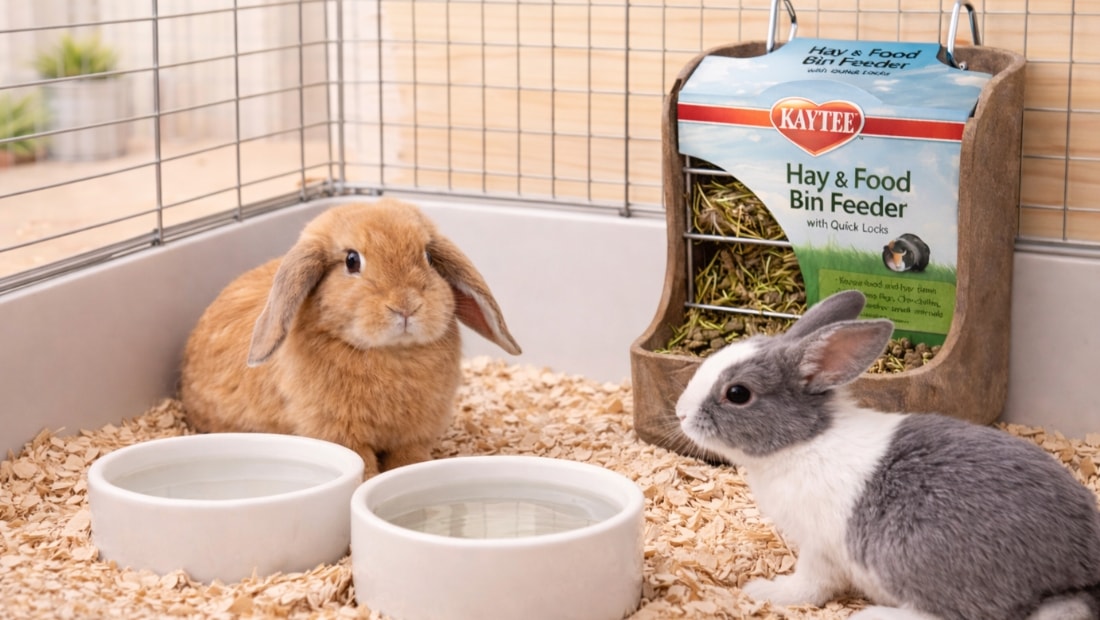
Feeders help keep hay off the floor and away from pee spots. Hanging feeders prevent rabbits from sitting on hay or dragging it across the cage. Most rabbits adjust quickly to pulling hay from a feeder once it is placed at a comfortable height.
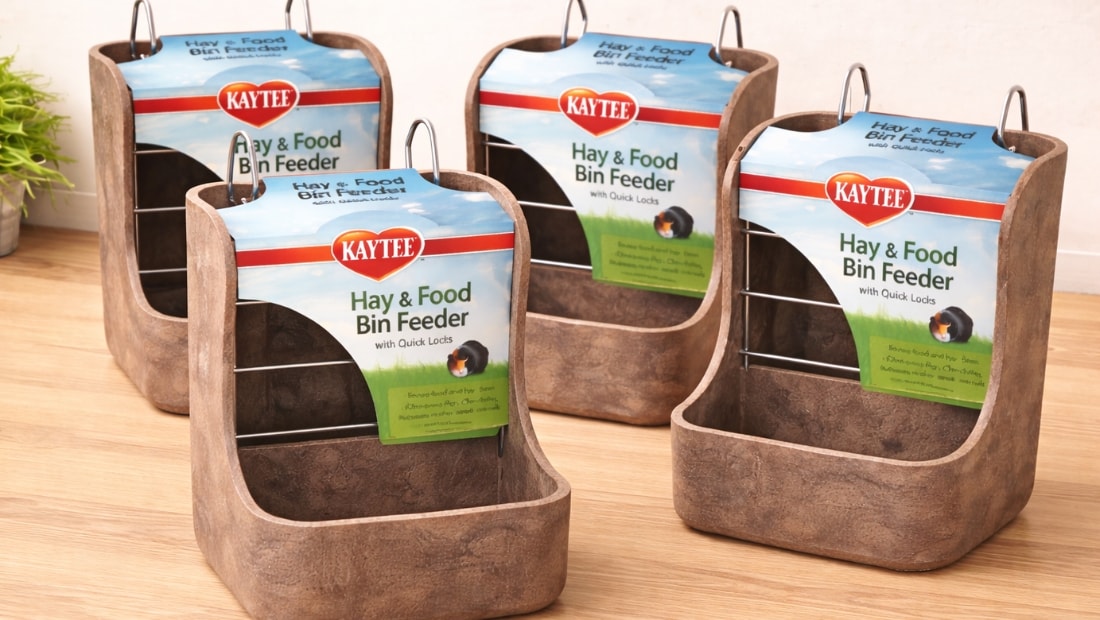
Some enclosed feeders also separate hay from pellets and clip securely to the cage. One is the Kaytee Hay-N-Food Bin Feeder, which keeps hay elevated and contained so it stays cleaner even when rabbits use the litter box directly underneath.
Why Cardboard Box Hay Holders Often Fail
Cardboard box hay holders may seem like a simple idea, but they often cause problems over time. Cardboard absorbs urine, breaks down when wet, and holds odor. Once a cardboard box smells like urine, rabbits are more likely to pee there again.
Rabbits also chew cardboard, which can cause the box to collapse or shift. This often leads to spilled hay, wet bedding, and repeated waste. Sturdy feeders hold their shape and keep hay cleaner for longer periods.
Cage Setup and Floor Layout
Cage layout plays a major role in where rabbits pee. If hay is placed near where a rabbit rests or sleeps, urine often ends up in that area. Most rabbits choose one corner of the cage as a bathroom and return to it consistently.
Placing the litter box in that corner and positioning hay above it helps guide behavior. Solid flooring with mats reduces urine splashing and prevents wet areas from spreading under the feeder.
Hormones and Territorial Peeing in Rabbits
Unspayed and unneutered rabbits are more likely to mark territory with urine. Peeing on their hay can be part of this marking behavior, especially during sexual maturity or hormonal changes.
Spaying or neutering often reduces urine marking over time. While it does not solve the issue immediately, it supports long-term improvement when combined with proper feeding and litter setup.
Stress and Changes in Routine
Rabbits may start peeing on their hay again after changes in their environment. New cages, new animals, different litter, or rearranging the enclosure can disrupt habits and cause confusion.
Keeping feeding and litter areas consistent helps rabbits feel secure. Stability supports better habits and helps rabbits return to clean feeding patterns more quickly.
Cleaning Habits That Support Progress
Spot cleaning wet litter daily removes urine scent that attracts repeat peeing. Rabbits often return to areas that smell like urine, even after habits improve.
Avoid changing the entire setup at once while habits are improving. Familiar scents help rabbits stick to learned routines and reduce setbacks.
Common Mistakes That Keep the Problem Going
One common mistake is moving hay around the cage too often. When hay placement changes, rabbits lose a clear sense of where food belongs and may begin peeing in new areas. Keeping hay in one consistent location helps rabbits build reliable habits.
Another issue is leaving fallen hay on the floor beneath the feeder. Over time, this loose hay becomes a new hay pile, which rabbits may sit on or pee on. Cleaning it up daily prevents it from turning into a second feeding and bathroom area.
Signs the Setup Is Working
A clear sign of progress is hay staying dry for longer periods. Rabbits continue to eat hay throughout the day without large amounts becoming wet or wasted.
You may also notice reduced odor in the enclosure and fewer pee spots outside the litter box. Urine stays contained in one area, making daily cleaning easier.
When Adjustments Are Needed
If hay still becomes wet, feeder height is often the cause. Feeders placed too low allow rabbits to sit underneath and pee upward. Raising the feeder slightly can correct this without changing the entire setup.
Litter box size also matters. A box that is too small allows urine to miss the target or splash outward, reaching nearby hay. Using a larger box that fits the rabbit comfortably helps keep hay clean.
Long-Term Benefits of Cleaner Hay
Stopping rabbits from peeing on their hay reduces waste and lowers feeding costs over time. Less hay is thrown away, even though intake stays the same.
Rabbits that eat more clean hay maintain better digestion and dental wear. Over the long run, this supports better health and fewer feeding-related issues.
Building Better Habits Over Time
Rabbits learn through routine and repetition rather than correction. When feeding areas, litter boxes, and resting spaces stay in the same locations each day, rabbits begin to rely on that structure. Over time, this consistency helps rabbits understand where hay belongs and where urine and poop should go, reducing peeing on their hay without extra training.
Frequent changes can slow progress. Moving hay, switching feeder styles too often, or rearranging the cage resets habits and creates confusion. Each adjustment needs time to work, often several weeks, and patience leads to better long-term results.
Conclusion
Rabbits peeing on their hay is almost always linked to enclosure setup rather than behavior problems. When hay sits on the floor or in resting areas, rabbits naturally treat it as part of their space. Raised hay, proper litter placement, and consistent cleaning help redirect this behavior in a way that makes sense to rabbits.
Small changes can lead to lasting improvement. Clean hay stays available longer, rabbits eat more consistently, and daily care becomes easier. With a stable routine and the right feeding layout, most rabbits stop peeing on their hay and maintain cleaner habits over time.

